
It's kind of a silly question, but one that non-linguists often like to ask - is this language easy to learn? Usually the easiest languages are just those that are closest to your natlang, but that's cheating. I'm interested in languages that would be easy for a wide range of speakers.
I've tried to think of examples, but I'm having a hard time coming up with any. I can think of some that are grammatically easy, and some that are phonetically easy, but not really any that are both. Writing is also of some interest, but an easy spoken language might would do.
My best suggestion is Swahili. It does have a lot of noun classes, but at least they are somewhat logical.
Easy languages
-
Herr Dunkel

- Smeric

- Posts: 1088
- Joined: Mon Jun 21, 2010 3:21 pm
- Location: In this multiverse or another
Re: Easy languages
The easiest language for you to learn is the one closest to your natural - that's no cheating, it's fact.
Now go get learning Frisian (or something else)
Now go get learning Frisian (or something else)
sano wrote:To my dearest Darkgamma,
http://www.dazzlejunction.com/greetings/thanks/thank-you-bear.gif
Sincerely,
sano


Re: Easy languages
Malay/Indonesian usually tops these sorts of lists. Two dozen phonemes, a handful of prefixes (two of which can arguably be called "inflectional"), and several suffixes (including enclitic pronoun forms).
Creole languages are well-represented, too. Analytic, isolating grammars and relatively small lexicons full of transparent derivations (except when they've been "enriched" by widespread borrowing from a standard language such as French or English).
Creole languages are well-represented, too. Analytic, isolating grammars and relatively small lexicons full of transparent derivations (except when they've been "enriched" by widespread borrowing from a standard language such as French or English).

Re: Easy languages
For Indo-European languages, I'd say Persian takes the prize, with a simple phonology, nominal morphology about as simple as English, and verbal morphology a bit more complicated but still far simpler than, say, Romance languages.
You have to learn the Arabic script but there are worse writing systems outthere…
You have to learn the Arabic script but there are worse writing systems outthere…
Re: Easy languages
It certainly is simple than Frnch (check your location), but there are even simpler things (for me)! Macedonian, AFAI understand, has a very easily understandable nominal system, and a verbal system that is like English's - you could also turn to Bulgarian (but then there's evidentiality)Legion wrote:For Indo-European languages, I'd say Persian takes the prize, with a simple phonology, nominal morphology about as simple as English, and verbal morphology a bit more complicated but still far simpler than, say, Romance languages.
You have to learn the Arabic script but there are worse writing systems outthere…
Warning: Recovering bilingual, attempting trilinguaility. Knowledge of French left behind in childhood. Currently repairing bilinguality. Repair stalled. Above content may be a touch off.

Re: Easy languages
What most people mean by "easy" seems to be "simple in morphology". Well, you can't get much simpler than Mandarin! Admittedly the phonology is pretty far from English and the writing system is... not easy.
So, go for an agglutinative language. Turkish is said to be nice. I can vouch for Ayacucho Quechua (whose phonology is also quite easy).
Thing is, any natlang is going to have, you know, an actual lexicon of thousands of words, plus a morass of syntax and idioms. And that's what really takes time to learn. Morphology is just the pons asinorum... a difficult early step, but just a fraction of the total time investment.
So, go for an agglutinative language. Turkish is said to be nice. I can vouch for Ayacucho Quechua (whose phonology is also quite easy).
Thing is, any natlang is going to have, you know, an actual lexicon of thousands of words, plus a morass of syntax and idioms. And that's what really takes time to learn. Morphology is just the pons asinorum... a difficult early step, but just a fraction of the total time investment.
Re: Easy languages
I'm surprised nobody suggested Dutchzompist wrote:What most people mean by "easy" seems to be "simple in morphology". Well, you can't get much simpler than Mandarin! Admittedly the phonology is pretty far from English and the writing system is... not easy.
So, go for an agglutinative language. Turkish is said to be nice. I can vouch for Ayacucho Quechua (whose phonology is also quite easy).
Thing is, any natlang is going to have, you know, an actual lexicon of thousands of words, plus a morass of syntax and idioms. And that's what really takes time to learn. Morphology is just the pons asinorum... a difficult early step, but just a fraction of the total time investment.

Warning: Recovering bilingual, attempting trilinguaility. Knowledge of French left behind in childhood. Currently repairing bilinguality. Repair stalled. Above content may be a touch off.
Re: Easy languages
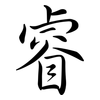
This is what I hate about people who talk about language learning. Their arguments basically amount to "Mandarin grammar is soooooo easy- no conjugations!", as if you just have to replace English words with Chinese words (that don't have endings based on case, tense, etc.) in a sentence to be able to speak it. Like you said, the phonology is hard to wrap your mouth around (...innuendo unintended), the writing system can be hard or easy depending on how you study, but what really kills me, at least, is the syntax. Basic Mandarin sentences are just SVO, but it's so much more complicated than that. There's the topicalization, aspect system, approximately 38753295013 uses of the character 了, the extremely left-branching nature of the language (unlike English which tends to vary in between), the classifier system, etc. etc. etc.zompist wrote:What most people mean by "easy" seems to be "simple in morphology". Well, you can't get much simpler than Mandarin! Admittedly the phonology is pretty far from English and the writing system is... not easy.
So yeah, I basically agree with your point that people tend to mean "simple morphology," but I hate when that's the basis of them calling it an "easy" language to learn.
Re: Easy languages
That's why I think creoles are actually the best candidates. Unless a lexical bar has been reintroduced due to indiscriminate borrowing, they tend to have a relatively small number of roots and a significantly higher degree of semantic transparency than non-creole languages.zompist wrote:Thing is, any natlang is going to have, you know, an actual lexicon of thousands of words, plus a morass of syntax and idioms. And that's what really takes time to learn. Morphology is just the pons asinorum... a difficult early step, but just a fraction of the total time investment.
Persian is actually a pretty lousy candidate from this point of view because it has scads of lexical borrowings from Arabic, which don't even show the semi-transparency of Latinate borrowings in English (e.g. two ~ double vs do ~ tasneyat). And as with Latinate borrowings in English, bits of the morphology may be borrowed as well. (E.g. ketāb "book", but kotobxānah "library", containing an Arabic broken plural.)


Re: Easy languages
Dutch is easy-peasy for English speakers. The only problem is that you have pretty much no use for it, because you'll meet very few Dutch people with no English. I only spent 2 months there in 2009 and mostly learnt by reading subtitles on the TV when I watched English movies, but after those 2 months I was able to make basic sentences and ask for shit in shops, and read quite a lot of labels. The only problem then was that because I showed a glimmer of comprehension when they spoke basic sentences and because I had quite good pronunciation (thank you, phonetics), they would mistake me for one of my own and answer back with very complicated sentences very quickly. And then I'd have to embarrassedly shake my head and mumble that I couldn't actually understand a word.Wattmann wrote:I'm surprised nobody suggested Dutchzompist wrote:What most people mean by "easy" seems to be "simple in morphology". Well, you can't get much simpler than Mandarin! Admittedly the phonology is pretty far from English and the writing system is... not easy.
So, go for an agglutinative language. Turkish is said to be nice. I can vouch for Ayacucho Quechua (whose phonology is also quite easy).
Thing is, any natlang is going to have, you know, an actual lexicon of thousands of words, plus a morass of syntax and idioms. And that's what really takes time to learn. Morphology is just the pons asinorum... a difficult early step, but just a fraction of the total time investment.
Re: Easy languages
My experience with Turkish is that it's kind of like Piano: it's very easy at first but you quickly get into surprisingly difficult stuff past the basis; you get irregular vowel harmony for many words, irregular morphophonologic phenomena here and there, rather complicated morphosyntax when you get into oblique relative clauses [to say nothing of the coexistence of a completely different system of relative clause alongside the native one, which is I guess borrowed from Persian], non-straightforward, lexicalised use of various voice suffixes, occasional oddities in the paradigms of some verbs, a wide array of non finite-forms and gerund constructions for verbs, with many different uses…zompist wrote: So, go for an agglutinative language. Turkish is said to be nice. I can vouch for Ayacucho Quechua (whose phonology is also quite easy).
Now none of this is *impossible*, it's probably even much easier than, say, your average slavic languages, but from your descriptions, I'd say Quechua is much more straightforward, as far as agglutinative languages go.
If it weren't for the writing system and the numeric classifiers, I'd say Japanese is probably the easiest agglutinative language [while the verbs are in practice less regular than the Turkish ones, there are much, much less forms overall].
Oh and, also, once, I took a semester of Czech. And let me tell you: complex morphology *is* a significant hindrance to the learning of a language. This is what I consider the hardest language I've ever studied. In spite of having much more recognizable vocabulary than Turkish or Japanese.
Re: Easy languages
True... plus, I think if a conlanger was given the task of creating a Global English whichlinguoboy wrote:That's why I think creoles are actually the best candidates. Unless a lexical bar has been reintroduced due to indiscriminate borrowing, they tend to have a relatively small number of roots and a significantly higher degree of semantic transparency than non-creole languages.zompist wrote:Thing is, any natlang is going to have, you know, an actual lexicon of thousands of words, plus a morass of syntax and idioms. And that's what really takes time to learn. Morphology is just the pons asinorum... a difficult early step, but just a fraction of the total time investment.
* reduced the already minimal morphology (including irregular verbs)
* fixed the spelling system
* added just a few neat features— like agreement particles and more aspects
they could hardly do better than Tok Pisin.
-
sirdanilot
- Avisaru

- Posts: 734
- Joined: Sat Aug 18, 2007 1:47 pm
- Location: Leiden, the Netherlands
Re: Easy languages
What makes a language easy, independent from whether you're used to it or not:
-transparent writing system
-little irregularities in morphology
-Few features in morphology period; i.e., few verb tenses/modi, no stuff like evidentiality/aspect, no noun classes/diminutives etc. These things individually aren't that bad, but if every single thing is marked with some kind of affix...
This is why I could, for example, say that the West-African language Anyi (which we documented in a fieldwork class so that I have a reasonably good understanding of it) is easier than Biblical Hebrew (semitic), despite the fact that they are both unrelated to my native language (dutch).
-non-devilish phonology.
Hebrew isn't that devilish if you don't pronounce the pharyngeals, but there's quite a few phonological rules to keep in mind.
Anyi did have two tones (which didn't really seem extremely important other than sometimes being a minimal contrast between two completely unrelated words which you would understand from context anyway) and some +/-ATR system which I still haven't figured out, but if it were a fully studied language with a good description of the phonology, it wouldn't be that hard to learn. Sometimes a vowel drops after /m/, but that's the most shocking phonological process, really.
-transparent writing system
Hebrew writing isn't very transparent with the lack of exact vowels and all, though it's a little better with masoretic vocalisation (which is still sometimes confusing with stuff like qamets chatuf etc.)
Anyi doesn't have a standard writing system, as far as I know (we documented the language in fieldwork class) so anything goes.
-little irregularities in morphology
Hebrew has a lot of language-historically induced irregularities, which may all be perfectly logical in isolation, but remembering them all is a pain.
Anyi seemed pretty regular for the most part.
-Few features in morphology period; i.e., few verb tenses/modi, no stuff like evidentiality/aspect, no noun classes/diminutives etc. These things individually aren't that bad, but if every single thing is marked with some kind of affix...
This is where Hebrew starts going abysmal. It has a plethora of modi (binyan), like active, passive, intensive, intensive passive etc..., it has lots of tenses (perfect, future, juissive etc.), then it has two noun classes, a plethora of possible suffixes to nouns and verbs, quite a few prefixes on verbs and nouns...
Anyi only had present, future and past (which were all marked with neat, easy to identify particles), no stuff like modi or aspect marking, no noun classes, heck even the plural marker was optional in most contexts.
No all too devilish syntactic constructions
Actually, Hebrew would beat Anyi in simplicity here. Subordinate clauses are marked fairly consistently with a marker ('asher).
Anyi, being a West-African language, has stuff like serial verb constructions (i.e. he takes X takes to give to Y) and comparatives were a bit tricky. It distinguishes between relative clauses marked with bɔ and subordinate clauses marked with kɛ. Also, Anyi doesn't like wh-movement.
Of course, everything remains subjective here. Perhaps there are people who would find the Hebrew system very straightforward, while they wouldn't be able to deal with the Anyi serial verb constructions or something.
-transparent writing system
-little irregularities in morphology
-Few features in morphology period; i.e., few verb tenses/modi, no stuff like evidentiality/aspect, no noun classes/diminutives etc. These things individually aren't that bad, but if every single thing is marked with some kind of affix...
This is why I could, for example, say that the West-African language Anyi (which we documented in a fieldwork class so that I have a reasonably good understanding of it) is easier than Biblical Hebrew (semitic), despite the fact that they are both unrelated to my native language (dutch).
-non-devilish phonology.
Hebrew isn't that devilish if you don't pronounce the pharyngeals, but there's quite a few phonological rules to keep in mind.
Anyi did have two tones (which didn't really seem extremely important other than sometimes being a minimal contrast between two completely unrelated words which you would understand from context anyway) and some +/-ATR system which I still haven't figured out, but if it were a fully studied language with a good description of the phonology, it wouldn't be that hard to learn. Sometimes a vowel drops after /m/, but that's the most shocking phonological process, really.
-transparent writing system
Hebrew writing isn't very transparent with the lack of exact vowels and all, though it's a little better with masoretic vocalisation (which is still sometimes confusing with stuff like qamets chatuf etc.)
Anyi doesn't have a standard writing system, as far as I know (we documented the language in fieldwork class) so anything goes.
-little irregularities in morphology
Hebrew has a lot of language-historically induced irregularities, which may all be perfectly logical in isolation, but remembering them all is a pain.
Anyi seemed pretty regular for the most part.
-Few features in morphology period; i.e., few verb tenses/modi, no stuff like evidentiality/aspect, no noun classes/diminutives etc. These things individually aren't that bad, but if every single thing is marked with some kind of affix...
This is where Hebrew starts going abysmal. It has a plethora of modi (binyan), like active, passive, intensive, intensive passive etc..., it has lots of tenses (perfect, future, juissive etc.), then it has two noun classes, a plethora of possible suffixes to nouns and verbs, quite a few prefixes on verbs and nouns...
Anyi only had present, future and past (which were all marked with neat, easy to identify particles), no stuff like modi or aspect marking, no noun classes, heck even the plural marker was optional in most contexts.
No all too devilish syntactic constructions
Actually, Hebrew would beat Anyi in simplicity here. Subordinate clauses are marked fairly consistently with a marker ('asher).
Anyi, being a West-African language, has stuff like serial verb constructions (i.e. he takes X takes to give to Y) and comparatives were a bit tricky. It distinguishes between relative clauses marked with bɔ and subordinate clauses marked with kɛ. Also, Anyi doesn't like wh-movement.
Of course, everything remains subjective here. Perhaps there are people who would find the Hebrew system very straightforward, while they wouldn't be able to deal with the Anyi serial verb constructions or something.

Re: Easy languages
I'm not convinced that your investigations in one fieldwork class are sufficient to give you a good understanding of all the (potential) complexities and details of Anyi syntax.
I think Chibi is right that when trying to answer this question people often gloss over syntactic complexities, and focus on stuff like phoneme inventory and number of categories marked morphologically. There's certainly such a thing as a level of morphological complexity (e.g. Athabaskan languages) or phonological complexity (e.g., Khoisan languages) that make language legitimately harder than average for non-speakers to learn. But syntax should be taken into account too.
I think Chibi is right that when trying to answer this question people often gloss over syntactic complexities, and focus on stuff like phoneme inventory and number of categories marked morphologically. There's certainly such a thing as a level of morphological complexity (e.g. Athabaskan languages) or phonological complexity (e.g., Khoisan languages) that make language legitimately harder than average for non-speakers to learn. But syntax should be taken into account too.
Re: Easy languages
They certainly do - gloss over syntactic complexities, I mean. But we highly educated people might be able to avoid that. 
I agree that pidgins and creoles like Tok Pisin are typically easy. That might also be one reason why Swahili, and perhaps English, are comparatively easy in some ways, since they are also sort of creole-like. But proper pidgins/creoles are kind of a category of their own, in my book.
Syntax is important, and phonology is important. We should probably look for small phoneme inventories and small syllables.
As for Mandarin, it certainly has those two things. I don't know much about the syntax, but I expect it's pretty tricky, since it's isolating. The phonology it a challenge for us IE speakers, but when you think about it, maybe a little bit of tone isn't all that difficult. Compared with the peculiar stress patterns and vague diphthongs of English, the Mandarin tones are really quite straightforward. But, as far as I know, there are few other big languages that use tone, so perhaps a large part of the world's population would consider that difficult?
In general, isolating languages seem easy at first, but then they have all that messy syntax. So maybe agglutinating is at least as easy. I would at least suspect that strongly fusional languages would not be as easy, but in some cases the difficulties may only be initial.
Another thing that would surely make things more difficult is arbitrary gender systems. Morphological complexity doesn't have to be much of a problem in the long run, as Zomp says, but genders have to be learned for every new word.
I agree that pidgins and creoles like Tok Pisin are typically easy. That might also be one reason why Swahili, and perhaps English, are comparatively easy in some ways, since they are also sort of creole-like. But proper pidgins/creoles are kind of a category of their own, in my book.
Syntax is important, and phonology is important. We should probably look for small phoneme inventories and small syllables.
As for Mandarin, it certainly has those two things. I don't know much about the syntax, but I expect it's pretty tricky, since it's isolating. The phonology it a challenge for us IE speakers, but when you think about it, maybe a little bit of tone isn't all that difficult. Compared with the peculiar stress patterns and vague diphthongs of English, the Mandarin tones are really quite straightforward. But, as far as I know, there are few other big languages that use tone, so perhaps a large part of the world's population would consider that difficult?
In general, isolating languages seem easy at first, but then they have all that messy syntax. So maybe agglutinating is at least as easy. I would at least suspect that strongly fusional languages would not be as easy, but in some cases the difficulties may only be initial.
Another thing that would surely make things more difficult is arbitrary gender systems. Morphological complexity doesn't have to be much of a problem in the long run, as Zomp says, but genders have to be learned for every new word.
Re: Easy languages
-----------
Last edited by Left on Wed Jun 19, 2013 2:59 am, edited 1 time in total.

Re: Easy languages
I'd have to say French. I would venture to say that, disregarding such dubious claims to the title as Scots, it has more recognizable words to an English speaker than any other. And the verbal system and syntax are not horrible.
Re: Easy languages
dhokarena > you should read the thread (or at least the op) before posting an answer.
Re: Easy languages
I don't think that morphologically simpler languages have a more complicated syntax. It is true that morphologically simpler languages tend to have stricter word order rules wrt the position of the subject, object and verb (though Chinese is an exception). But stricter does not mean more complicated. If a hypothetical language always has word order Subject Verb Object, without exception (I am not sure if such a language exists) it is less complicated than a language that has more variation. Also, in languages with a so-called "free" word order the word order is usually not free, but rather governed by complicated, and to an extent language-specific rules, regarding the information structure, where usually you need to make more fine-grained distinctions than just topic and focus.And then there is also stuff that has to do with syntax that is strictly not word-order, such as passivization and the distribution of reflexives, that is largely independent from the extent in which a language is complicated morphologically.
That said, in my experience word order is rarely the thing that at least non-native speakers of Dutch are having trouble with, and Dutch has quite complicated, and very peculiar rules for the order of verbs in verbal clusters, for example. What most non-native speakers of Dutch have trouble with is knowing which words are of the common gender and which words are of the neuter gender, an area where Dutch is not especially complicated compared to other languages (Dutch only has 2 genders, although there are very few clues to what gender a noun belongs to).
That said, in my experience word order is rarely the thing that at least non-native speakers of Dutch are having trouble with, and Dutch has quite complicated, and very peculiar rules for the order of verbs in verbal clusters, for example. What most non-native speakers of Dutch have trouble with is knowing which words are of the common gender and which words are of the neuter gender, an area where Dutch is not especially complicated compared to other languages (Dutch only has 2 genders, although there are very few clues to what gender a noun belongs to).
Re: Easy languages
Isn’t Spanish easy for an English-speaker? It was for me, but then again, I’ve studied French and Latin, and then again, I haven't started with the Spanish subjunctive yet.
-
GrinningManiac

- Lebom

- Posts: 214
- Joined: Tue Nov 22, 2011 5:38 pm
Re: Easy languages
Spanish is quite good because the pronunciation isn't difficult for English-speakers and a lot of the vocab is instantly recognisable
I would argue Chinese is a bajillion times easier than people who haven't looked at it make it out to be. Making simple sentences in Mandarin is far, far easier than, say, Russian or even Spanish. A word is always that word - no declensions nor conjugations nor inflections based upon anything.
I would argue Chinese is a bajillion times easier than people who haven't looked at it make it out to be. Making simple sentences in Mandarin is far, far easier than, say, Russian or even Spanish. A word is always that word - no declensions nor conjugations nor inflections based upon anything.
Re: Easy languages
Have you ever learned any morphologically simpler languages? Because I can tell you from years of learning Chinese that syntax it's NOT just as easy as learning the word order and sticking to that the entire time you speak that language. As I said before, there's (morphologically unmarked) topicalization, there's sentences whose entire meaning changes with the addition of ONE character.merijn wrote:I don't think that morphologically simpler languages have a more complicated syntax. It is true that morphologically simpler languages tend to have stricter word order rules wrt the position of the subject, object and verb (though Chinese is an exception). But stricter does not mean more complicated. If a hypothetical language always has word order Subject Verb Object, without exception (I am not sure if such a language exists) it is less complicated than a language that has more variation. Also, in languages with a so-called "free" word order the word order is usually not free, but rather governed by complicated, and to an extent language-specific rules, regarding the information structure, where usually you need to make more fine-grained distinctions than just topic and focus.And then there is also stuff that has to do with syntax that is strictly not word-order, such as passivization and the distribution of reflexives, that is largely independent from the extent in which a language is complicated morphologically.
Mandarin sentences ARE basically SVO, but any time you want to add something on the basic 'SVO' pattern, it feels like something changes. Ditransitive sentences generally have the pattern SOVI, for example (O = object, I = indirect object), time duration sentences require you to repeat the verb after the direct object (SVOVT, T = time phrase). Topicalization runs rampant in the language, in which sentences are basically OSV, which as I said before is morphologically unmarked, unlike in morphologically complex languages- it's left to context. Relative clauses, and basically all subordinate clauses, come before the noun it modifies, which isn't a problem on it's own (since the topic is about generally easy langs), but presents a problem for anyone who speaks a European language natively. It's pro-drop without verb marking, so the meaning is left to context. And let's not even get into the dozens of particles that slightly shade the meaning of the sentence, and are quite hard for learners to pick up on. ETC. ETC. ETC. ETC.
So yeah, there's a lot more going on than "just" being SVO
And @GrinningManiac, I can see you didn't read anything I said. Mandarin IS indeed quite easy compared to other languages if all you want to do is form basic sentences that only have 1 subject, 1 verb, and 1 direct object (which is a noun). God forbid you ever want to continue and learn how all those rules come crashing down on you if you want to form a more complex sentence.
NE: I would just like to explicitly state that I am NOT arguing that morphologically complex languages are so easy syntactically! I am simply arguing that Mandarin is FAR MORE complicated than people make it out to be, and I can only imagine how the situation is similar in other morphologically simpler languages.
Re: Easy languages
Well, I was arguing that languages with a strict word order are not more complicated than a languages with a so-called free word-order. I specifically mentioned Chinese as being not strict while still being morphologically simple, so I don't see how you saying Chinese is complicated disproves my point. It just annoys me when people say about languages like say Hungarian (and indeed Chinese), "well, there are no rules regarding the word order" when that is not true, there is more variation, but that variation is governed by rules as well.Chibi wrote:Have you ever learned any morphologically simpler languages? Because I can tell you from years of learning Chinese that syntax it's NOT just as easy as learning the word order and sticking to that the entire time you speak that language. As I said before, there's (morphologically unmarked) topicalization, there's sentences whose entire meaning changes with the addition of ONE character.merijn wrote:I don't think that morphologically simpler languages have a more complicated syntax. It is true that morphologically simpler languages tend to have stricter word order rules wrt the position of the subject, object and verb (though Chinese is an exception). But stricter does not mean more complicated. If a hypothetical language always has word order Subject Verb Object, without exception (I am not sure if such a language exists) it is less complicated than a language that has more variation. Also, in languages with a so-called "free" word order the word order is usually not free, but rather governed by complicated, and to an extent language-specific rules, regarding the information structure, where usually you need to make more fine-grained distinctions than just topic and focus.And then there is also stuff that has to do with syntax that is strictly not word-order, such as passivization and the distribution of reflexives, that is largely independent from the extent in which a language is complicated morphologically.
Mandarin sentences ARE basically SVO, but any time you want to add something on the basic 'SVO' pattern, it feels like something changes. Ditransitive sentences generally have the pattern SOVI, for example (O = object, I = indirect object), time duration sentences require you to repeat the verb after the direct object (SVOVT, T = time phrase). Topicalization runs rampant in the language, in which sentences are basically OSV, which as I said before is morphologically unmarked, unlike in morphologically complex languages- it's left to context. Relative clauses, and basically all subordinate clauses, come before the noun it modifies, which isn't a problem on it's own (since the topic is about generally easy langs), but presents a problem for anyone who speaks a European language natively. It's pro-drop without verb marking, so the meaning is left to context. And let's not even get into the dozens of particles that slightly shade the meaning of the sentence, and are quite hard for learners to pick up on. ETC. ETC. ETC. ETC.
So yeah, there's a lot more going on than "just" being SVO
And I have learned a morphologically simple language as a second language, namely English, and it is not very complicated syntactically, (or rather, not more complicated than the slightly more morphologically complicated Dutch)
Re: Easy languages
Hungarian is extremely simple, you know... Its syntax is far easier than that of English (ex: "How would he have not had the knowledge of that girl being too fine a lass for him") because it is less fixed, and you can learn the morphology far quicker than you can learn syntax.merijn wrote:Well, I was arguing that languages with a strict word order are not more complicated than a languages with a so-called free word-order. I specifically mentioned Chinese as being not strict while still being morphologically simple, so I don't see how you saying Chinese is complicated disproves my point. It just annoys me when people say about languages like say Hungarian (and indeed Chinese), "well, there are no rules regarding the word order" when that is not true, there is more variation, but that variation is governed by rules as well.Chibi wrote:Have you ever learned any morphologically simpler languages? Because I can tell you from years of learning Chinese that syntax it's NOT just as easy as learning the word order and sticking to that the entire time you speak that language. As I said before, there's (morphologically unmarked) topicalization, there's sentences whose entire meaning changes with the addition of ONE character.merijn wrote:I don't think that morphologically simpler languages have a more complicated syntax. It is true that morphologically simpler languages tend to have stricter word order rules wrt the position of the subject, object and verb (though Chinese is an exception). But stricter does not mean more complicated. If a hypothetical language always has word order Subject Verb Object, without exception (I am not sure if such a language exists) it is less complicated than a language that has more variation. Also, in languages with a so-called "free" word order the word order is usually not free, but rather governed by complicated, and to an extent language-specific rules, regarding the information structure, where usually you need to make more fine-grained distinctions than just topic and focus.And then there is also stuff that has to do with syntax that is strictly not word-order, such as passivization and the distribution of reflexives, that is largely independent from the extent in which a language is complicated morphologically.
Mandarin sentences ARE basically SVO, but any time you want to add something on the basic 'SVO' pattern, it feels like something changes. Ditransitive sentences generally have the pattern SOVI, for example (O = object, I = indirect object), time duration sentences require you to repeat the verb after the direct object (SVOVT, T = time phrase). Topicalization runs rampant in the language, in which sentences are basically OSV, which as I said before is morphologically unmarked, unlike in morphologically complex languages- it's left to context. Relative clauses, and basically all subordinate clauses, come before the noun it modifies, which isn't a problem on it's own (since the topic is about generally easy langs), but presents a problem for anyone who speaks a European language natively. It's pro-drop without verb marking, so the meaning is left to context. And let's not even get into the dozens of particles that slightly shade the meaning of the sentence, and are quite hard for learners to pick up on. ETC. ETC. ETC. ETC.
So yeah, there's a lot more going on than "just" being SVO
And I have learned a morphologically simple language as a second language, namely English, and it is not very complicated syntactically, (or rather, not more complicated than the slightly more morphologically complicated Dutch)
Warning: Recovering bilingual, attempting trilinguaility. Knowledge of French left behind in childhood. Currently repairing bilinguality. Repair stalled. Above content may be a touch off.
Re: Easy languages
Oh I see, I thought the "except Chinese" had to do with SOV word order for some reason (you said something like "strict word order with respect to subject, object, and verb"), so I thought the "except" was to the order of the elements, not to the strictness.merijn wrote:I specifically mentioned Chinese as being not strict while still being morphologically simple, so I don't see how you saying Chinese is complicated disproves my point.