Things you love or hate in language textbooks
Posted: Mon Dec 03, 2012 5:32 am
So, what things do you like seeing or would you like to see in a textbook? What do you hate seeing in textbooks? Let's imagine that it isn't a textbook meant for general use by high-school/college students or by adults with tourist-y purposes that a publisher these days would actually be willing to sell, but a book tailored to our needs (whether they might be learning a language for real, or just a passing thing).
Here's some ideas off the top of my head:
1. The usual: a detailed description of pronunciation using IPA, that includes a fair description of allophones, even across words.
2. Some discussion about stress. Any good English textbook should have something to say about "hót dóg" versus "hótdog", about "I lóve you" and "I gáve it to yóu", about "thánk you" (which you can reply to with a "thánk yóu").
3. Swear words, formation of insults and general vulgarities (and how to use them, of course, not only longggg lists of words and expressions as some books on slang do, e.g. Eveline Chao's Niubi! The Real Chinese You Were Never Taught in School).
4. Fillers (equivalents to "uhhhh", "y'know", "like", etc.). Textbooks sadly almost never include these, in spite of how useful they could be to any learner!
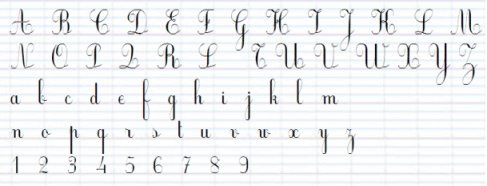
5. A serious discussion about handwriting, with real-world examples intended to be understood by other native speakers, not just tables in some official elementary/primary school calligraphic style. Typical differences between men's and women's handwriting would be nice too. In fact, in the case of Chinese, common handwriting abbreviations should probably be taught alongside the Sòng/Míng style.
6. Texting abbreviations (which are useful for SMS, facebook, YouTube, online forums, graffiti, even ads).
7. Paragraphs of text, with the same idea/theme, accompanied by a few glosses below for new vocabulary. Xephyr, who gave me this idea, says that too often textbooks depend on exercises of floating, context-less sentences.
I don't know what to think about some other things though:
甲. I asked this same question years ago in another forum, and somebody told me it'd be a good idea to give some general treatment of word order at the beginning, at least as something you can refer to. (Specifically, that user was frustrated by the great amount of adverbs and other adjuncts/modifiers he was being taught in his Spanish class, all of which he didn't know how to put in a sentence.)
乙. What do you guys think about those cultural notes you often find? Do you find them alright and interesting? Tedious?
丙. What about vocabulary lists? I guess they're just ok to introduce vocabulary, though sometimes they can be so excessively long... that by the time you reach the end, you get the impression you already forgot everything at the beginning. Another thing: a couple Latin textbooks I've seen included long descriptions (some 4-6 lines) on what they meant, what do you guys think? Or are vocab lists a bad idea at all, and all vocabulary should be introduced in sentences or something once you get the past the first baby steps?
I tried to see if there was a thread for this for an hour, but I couldn't find any. Viktor77 posted something with a similar title, but he was only concerned about teaching pronunciation.
Some keywords (might be useful for somebody trying to find this thread years later?): language learning book worst best teaching method features
Here's some ideas off the top of my head:
1. The usual: a detailed description of pronunciation using IPA, that includes a fair description of allophones, even across words.
2. Some discussion about stress. Any good English textbook should have something to say about "hót dóg" versus "hótdog", about "I lóve you" and "I gáve it to yóu", about "thánk you" (which you can reply to with a "thánk yóu").
3. Swear words, formation of insults and general vulgarities (and how to use them, of course, not only longggg lists of words and expressions as some books on slang do, e.g. Eveline Chao's Niubi! The Real Chinese You Were Never Taught in School).
4. Fillers (equivalents to "uhhhh", "y'know", "like", etc.). Textbooks sadly almost never include these, in spite of how useful they could be to any learner!
5. A serious discussion about handwriting, with real-world examples intended to be understood by other native speakers, not just tables in some official elementary/primary school calligraphic style. Typical differences between men's and women's handwriting would be nice too. In fact, in the case of Chinese, common handwriting abbreviations should probably be taught alongside the Sòng/Míng style.
6. Texting abbreviations (which are useful for SMS, facebook, YouTube, online forums, graffiti, even ads).
7. Paragraphs of text, with the same idea/theme, accompanied by a few glosses below for new vocabulary. Xephyr, who gave me this idea, says that too often textbooks depend on exercises of floating, context-less sentences.
I don't know what to think about some other things though:
甲. I asked this same question years ago in another forum, and somebody told me it'd be a good idea to give some general treatment of word order at the beginning, at least as something you can refer to. (Specifically, that user was frustrated by the great amount of adverbs and other adjuncts/modifiers he was being taught in his Spanish class, all of which he didn't know how to put in a sentence.)
乙. What do you guys think about those cultural notes you often find? Do you find them alright and interesting? Tedious?
丙. What about vocabulary lists? I guess they're just ok to introduce vocabulary, though sometimes they can be so excessively long... that by the time you reach the end, you get the impression you already forgot everything at the beginning. Another thing: a couple Latin textbooks I've seen included long descriptions (some 4-6 lines) on what they meant, what do you guys think? Or are vocab lists a bad idea at all, and all vocabulary should be introduced in sentences or something once you get the past the first baby steps?
I tried to see if there was a thread for this for an hour, but I couldn't find any. Viktor77 posted something with a similar title, but he was only concerned about teaching pronunciation.
Some keywords (might be useful for somebody trying to find this thread years later?): language learning book worst best teaching method features



 I think you should have some cultural background to the language you are studying.
 Also cursive T in russian is like Pi with a 3rd leg and G is a backwards S. OI
